Kategoriat: Paras AI:n tai muun uuden teknologian käyttö & Paras Freelance-työ
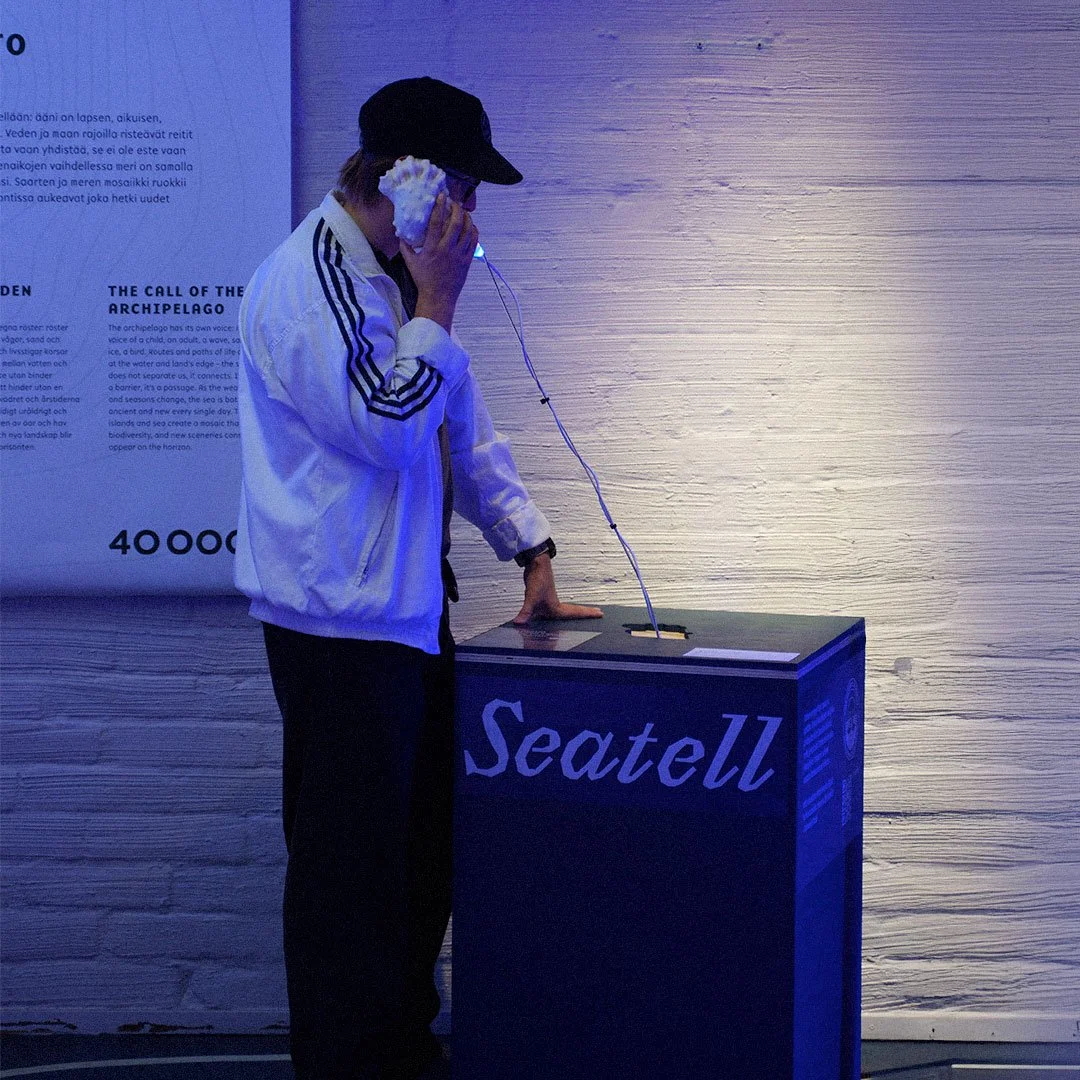
Hold a seashell to your ear. Now imagine hearing more than the sound of waves—short, intimate messages, the state of the Baltic Sea translated. Based on live environmental data, composed and voiced by AI. A poetic whisper in a language you both share.

“I am the Baltic Sea. I bloom when I am full — not with life, but with excess. The green clouds you see are signals: of too much, too fast, too long. But they can fade. And they will, when your choices flow with care. You are part of this shore, and you matter to me.”
〰️
“I am the Baltic Sea. I bloom when I am full — not with life, but with excess. The green clouds you see are signals: of too much, too fast, too long. But they can fade. And they will, when your choices flow with care. You are part of this shore, and you matter to me.” 〰️
Listen samples. Please refresh the page to listen again.
Rather than making bold claims, SEATELL invites quiet reflection.
It's a prototype of a thought—not a product.
Starting point
We are surrounded by data on the well-being of nature. The poor state of the Baltic Sea isn’t a secret, but a scientifically monitored and widely acknowledged fact. Still, numbers rarely create emotion or a sense of agency.
Keep the Archipelago Tidy Association, an environmental organisation protecting our waterways and making their state visible and heard, wanted to explore whether emerging technologies could help bridge the gap between environmental data and human experience. Could verbalising the unseen change how we relate to the sea? Could technology help us listen to nature more carefully?
Instead of a flashy tech demo or humanising nature, the project is an open question and an ongoing exploration. It aims to create space to think, rather than produce answers.
Strategy
Instead of making the state of the Baltic Sea louder or more alarming, the strategy was to make it more personal and gentle. The installation aimed to translate raw, numerical data into something that can be felt, not explained. We didn’t use emerging technology, generative AI, just for the sake of it, but because it enables us to act on the strategy and idea — as an interpreter between cold data and human emotion. Instead of an experience operated through a screen or phone, we wanted to create a tangible artefact: a vessel with an existing ritual, creating a moment and space for careful listening.
Creative Solution
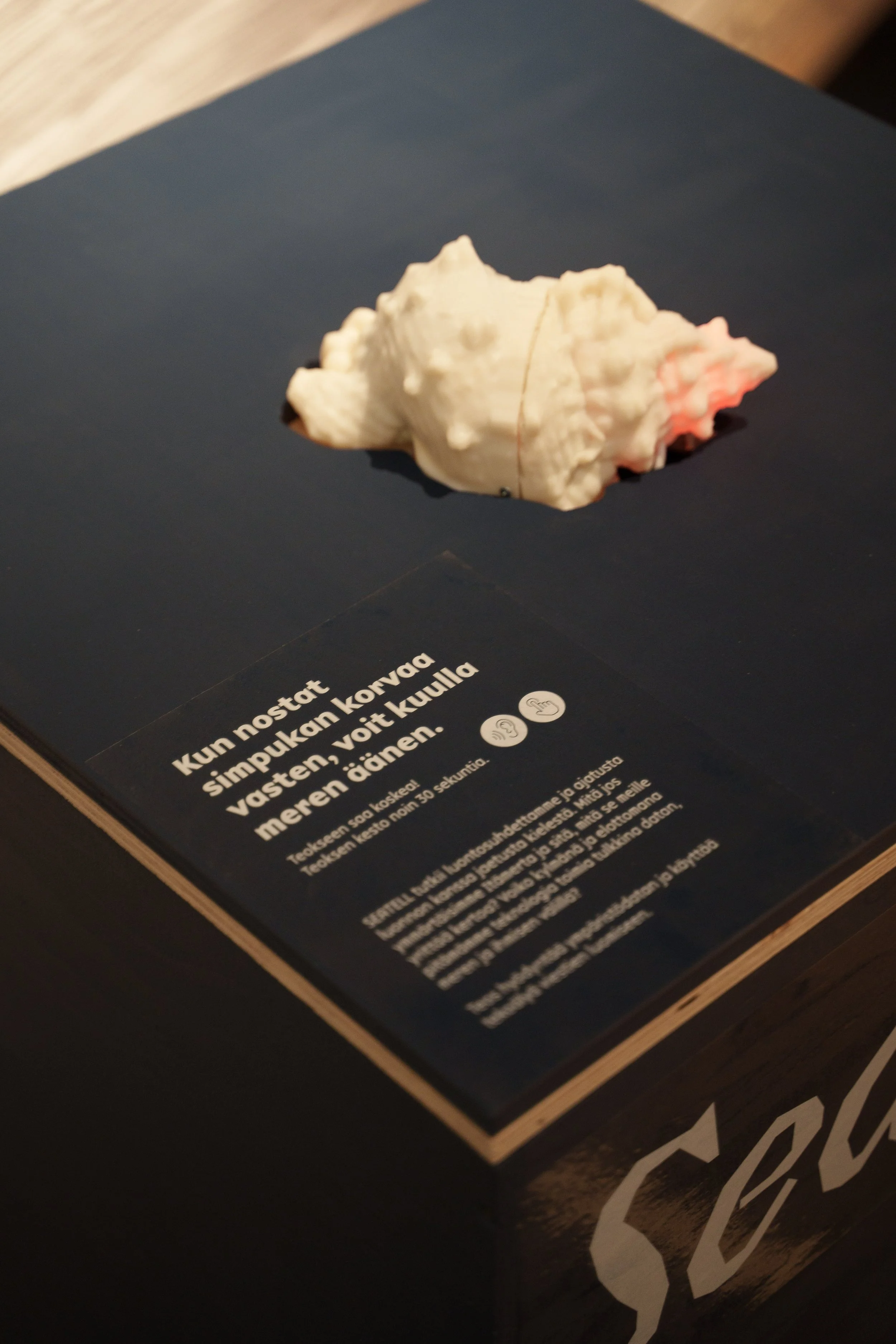
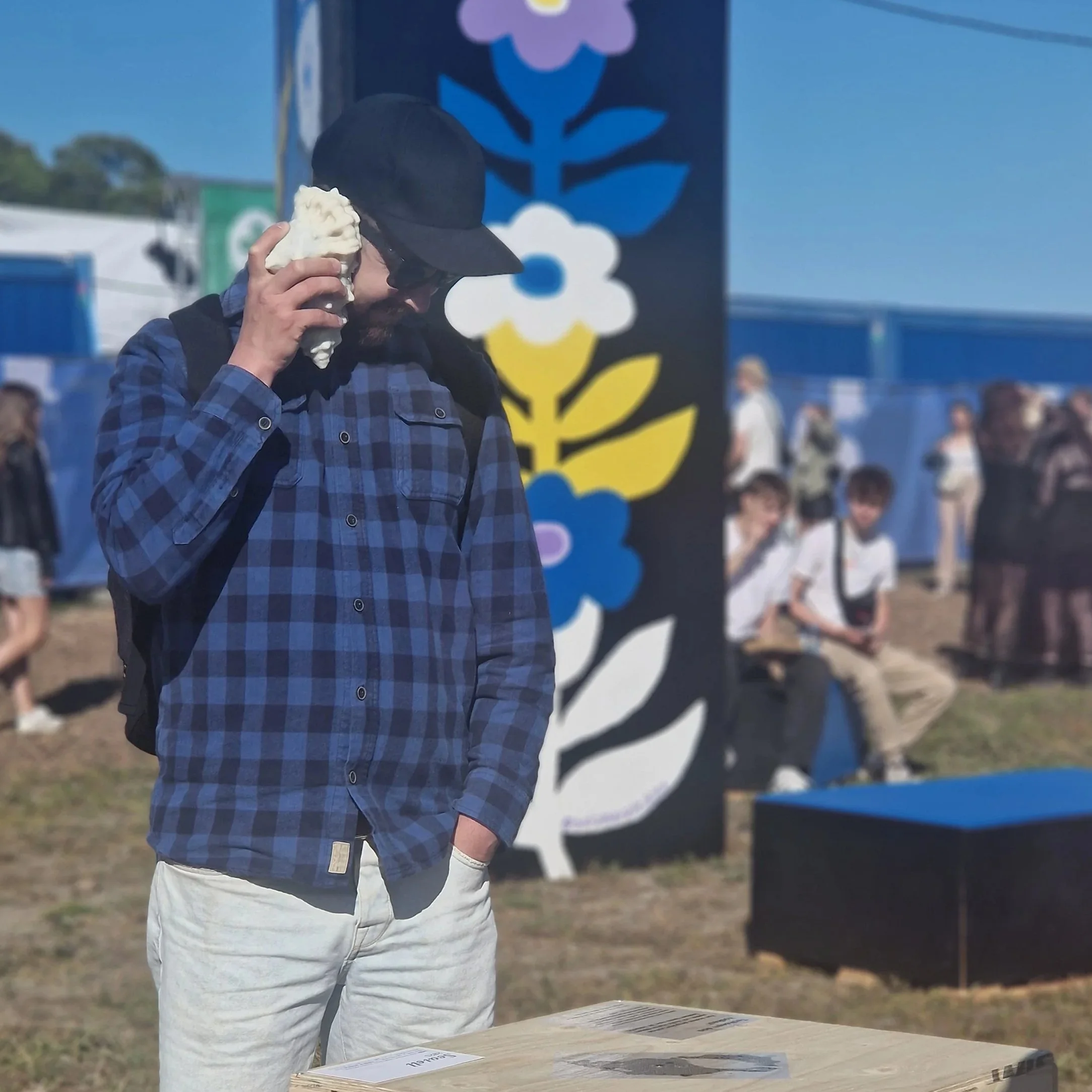
We wanted to create an experience deeply rooted in a ritual — a nostalgic act associated with listening to nature. By lifting a seashell from its pedestal, instead of the familiar sound of waves, the listener hears a short, 30-second poetic message based on current marine data. The shell becomes an interface for deeper listening.
The moment of listening is personal, and this is intentional. In addition to the message, the act becomes a brief pause to reflect.
Generative AI is used both to compose the messages from environmental data and to voice them. The system doesn’t claim to speak for nature, but acts as an interpreter in between — artificial, imperfect, and speculative.
Result
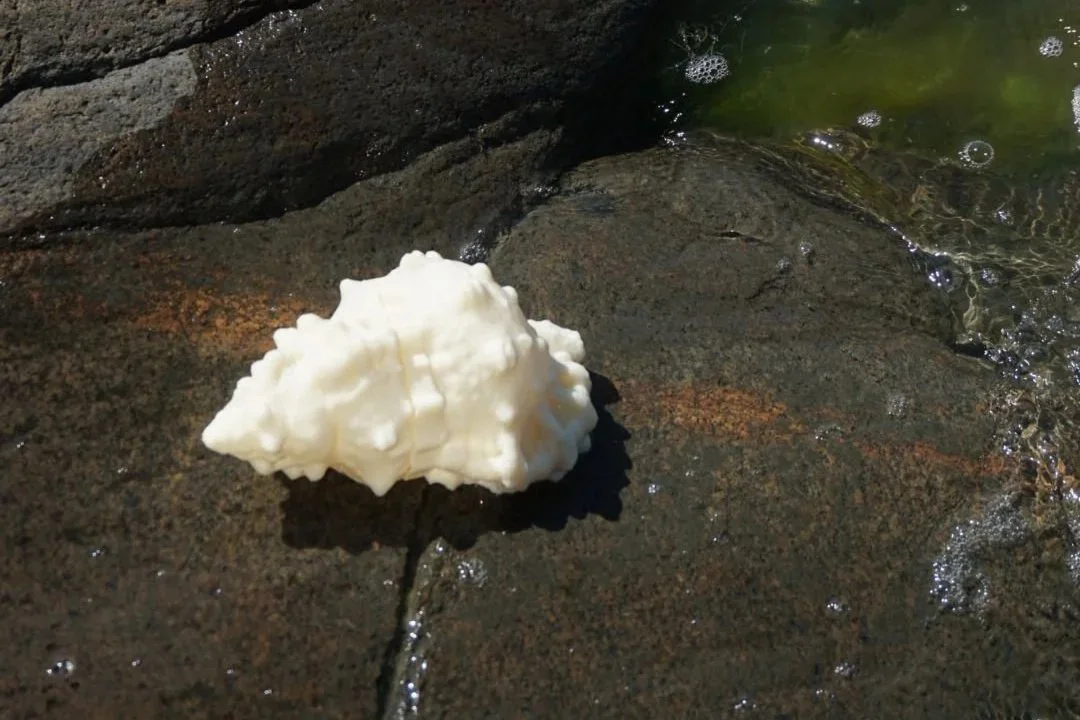
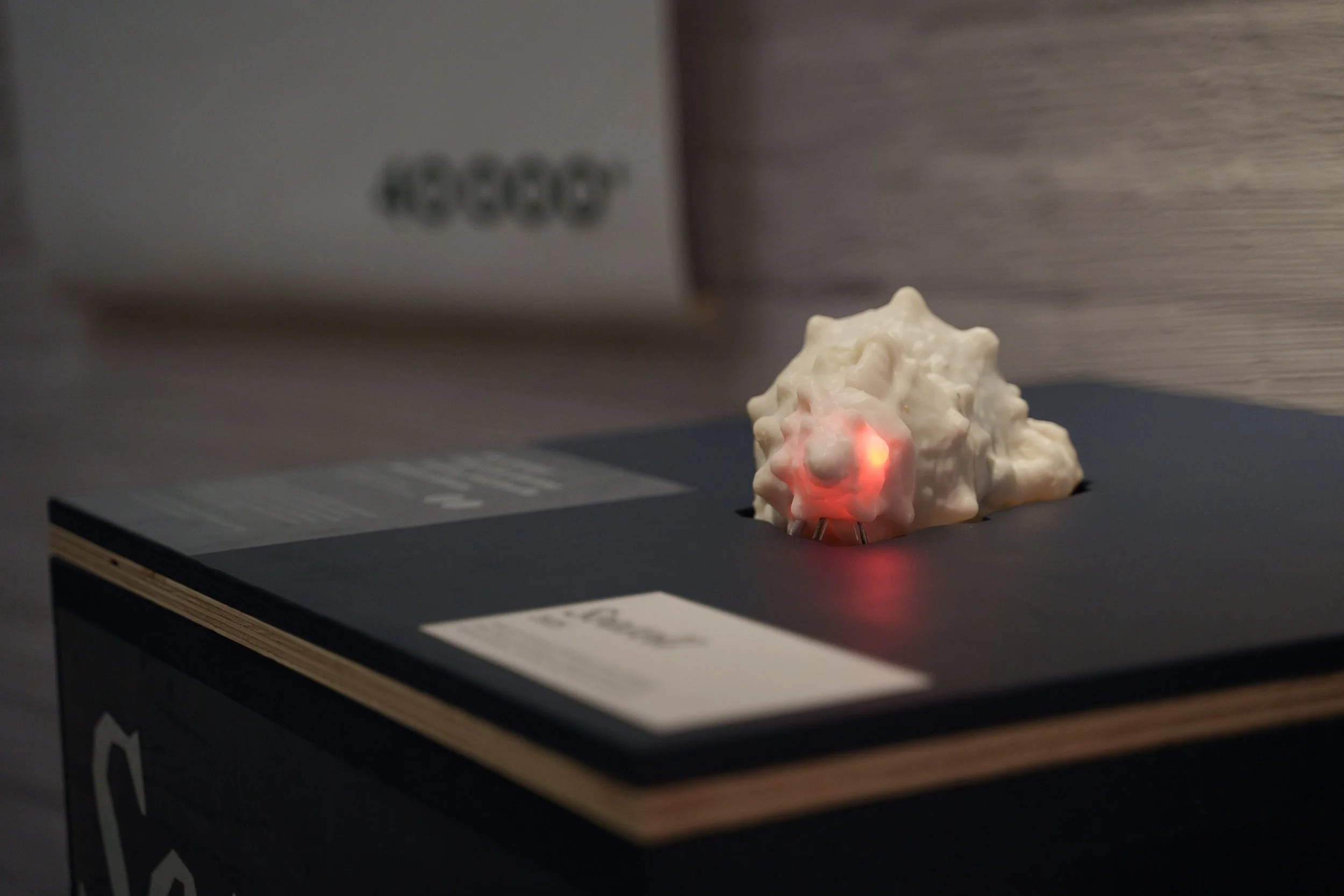
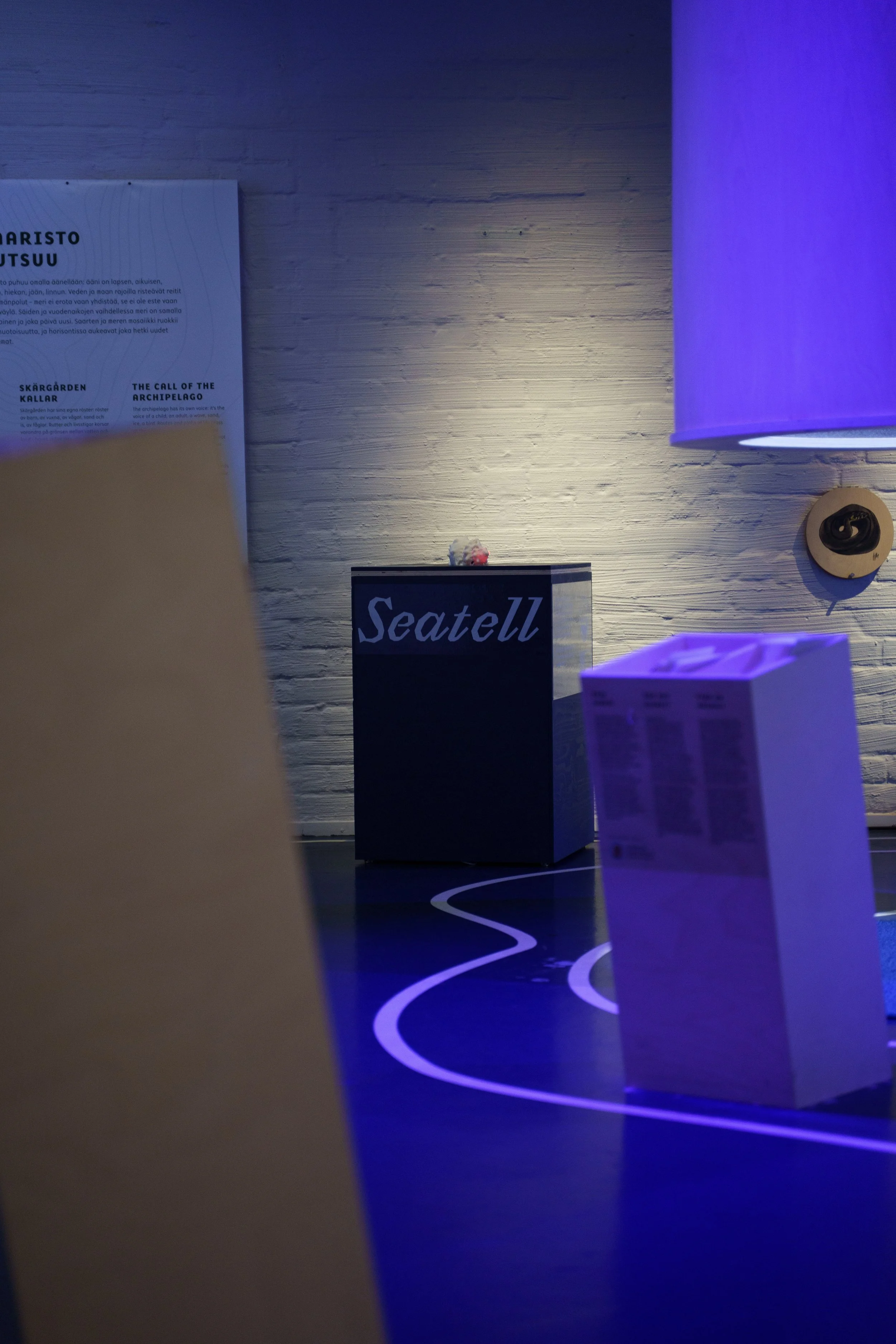
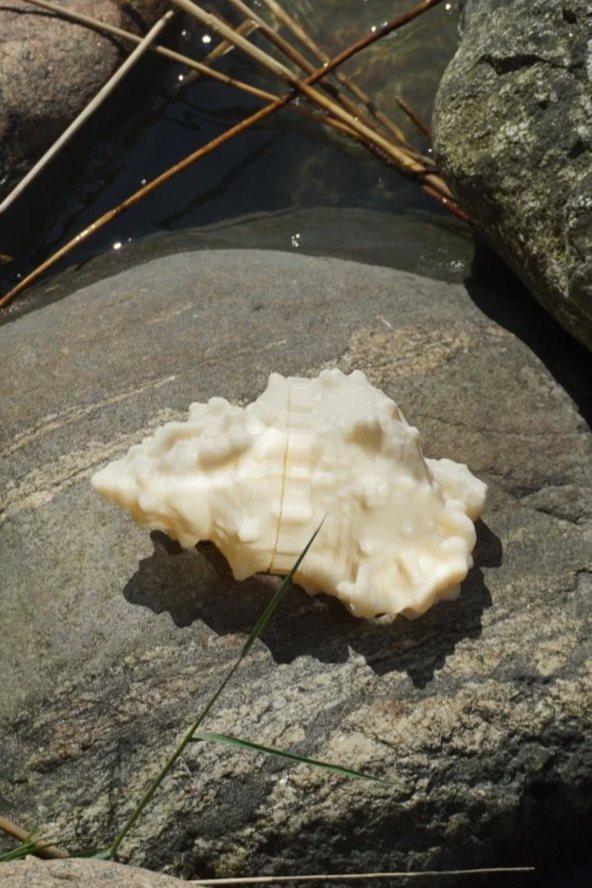
SEATELL is a physical, interactive installation consisting of a 3D-printed shell housing a microcomputer. By lifting the seashell, a poetic message based on current marine data is played.
Tangibility is key to making the digital more impactful. By hijacking an existing ritual, the installation offers something familiar and nostalgic while remaining novel. The environmental message becomes personal and quiet rather than provocative or loud — an experience that lingers and is felt more deeply. People became protective of the messages, experiencing them as something shared only with themselves, like a personal secret. In an age of mass media, this felt like a meaningful success.
The installation has sparked childlike joy, wonder and questions. Instead of “in your face” -doom, the messages linger on you longer. The installation was launched at Ruisrock Festival 2025 and is now housed at Forum Marinum in Turku, where it continues to evolve.
Reflection
The use of AI and plastic has been part of the exploration as well. While efforts were made to minimise environmental impact in both production and operation, neither the materials nor the technology are problem-free. These contradictions become part of the work, raising the question of whether the end can justify the means.
The role of AI is twofold. It allows us to create messages at a speed that would not otherwise be possible. It is also a way to voice an entity that, for now, has not had a vocal expression.
Technical execution
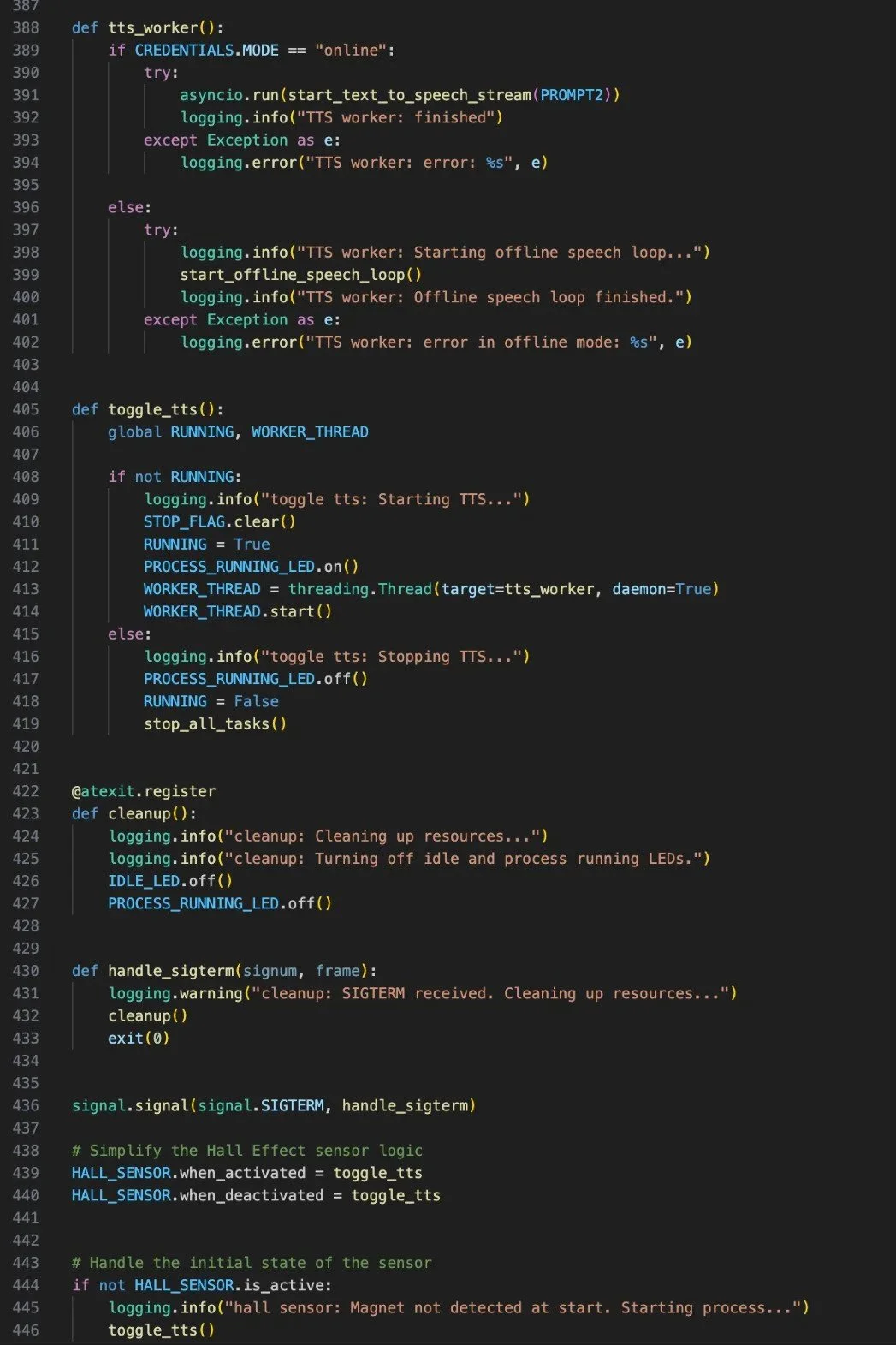
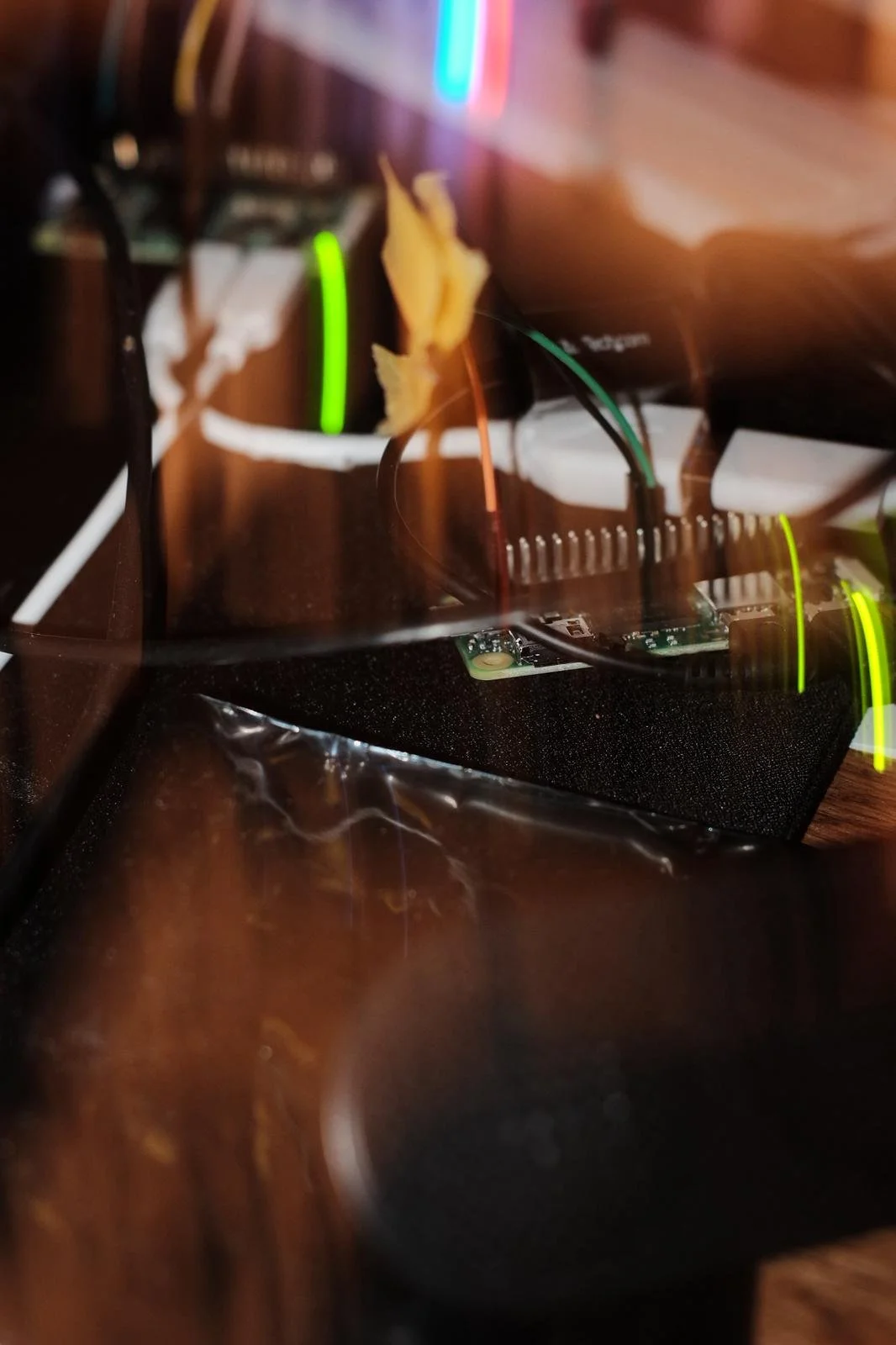
The installation is powered by a microcomputer housed inside a 3D-printed casing reminiscent of a seashell. When lifted, a hall sensor triggers playback of an AI-generated and voiced message fetched from the cloud.
The messages are based on current open-source marine data from Ilmatieteenlaitos and research data from Keep the Archipelago Tidy Association on the threats facing the Baltic Sea. The shell was printed in collaboration with the Turku University of Applied Sciences.
Team
-
Antti Partanen (freelancer)
Development, code, assembly
-
Akseli Kouvo (freelancer)
Concept design, assembly
-
Kuisma Väänänen (freelancer)
Visuals
-
Juho Norokytö (freelancer)
Modeling
-
Oskari Pelli (freelancer)
Modeling
-
Veera Säilä
Pidä Saaristo Siistinä ry
-
Julia Jännäri
Pidä Saaristo Siistinä ry
-
Kiia Palo
Pidä Saaristo Siistinä ry
-
Hanna Niittymäki
Forum marinum
-
Heini Sorakivi
Forum marinum
-
Pekka Törnqvist
Turku AMK
-
Tommi Tuomola
Turku AMK
-
Siiri Welling
Turku AMK